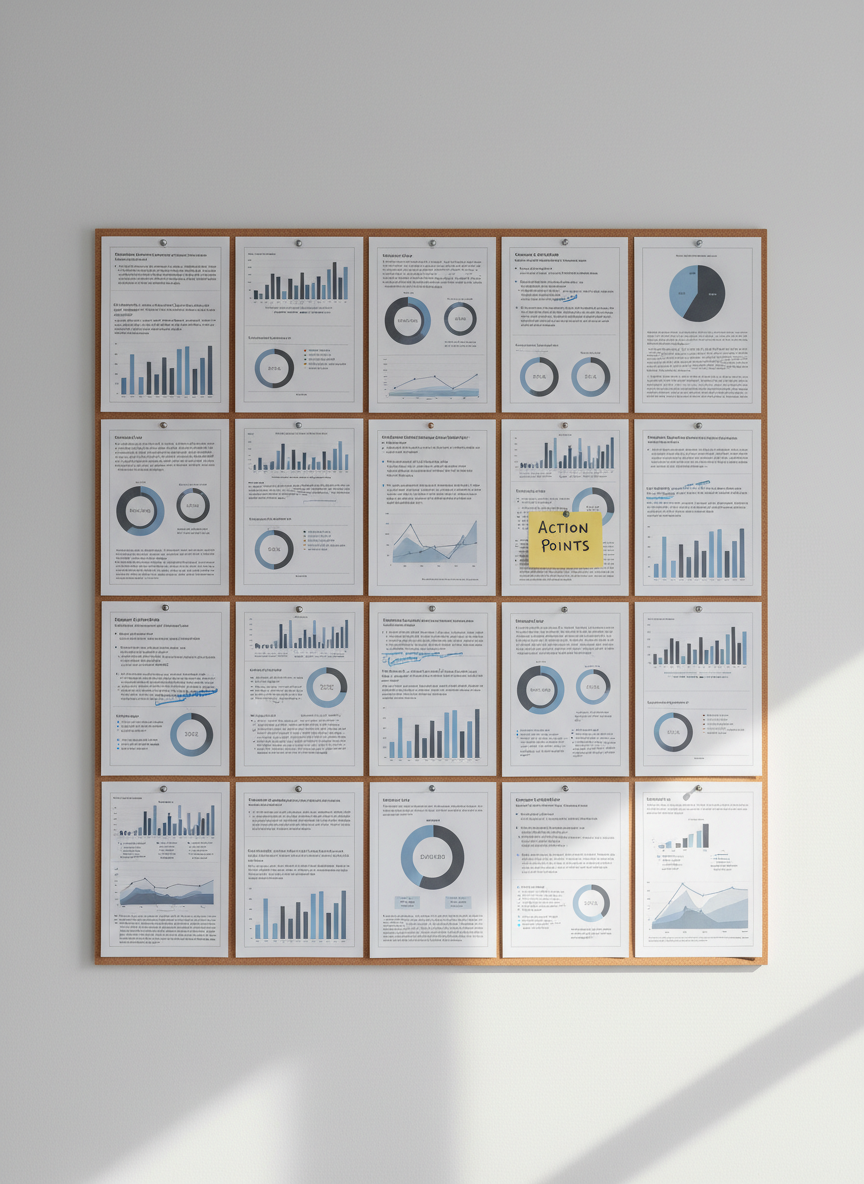
A large pinboard covered in neatly arranged printed charts and graphs about victim experiences, each page held by simple silver pins. The charts show bar graphs, line graphs, and carefully highlighted key findings in soft blues and greys, with a single yellow note card drawing attention to “action points.” The pinboard sits on a quiet wall in a minimalist office with pale grey paint. Soft, directional morning light from the right brushes across the papers, creating gentle shadows at their edges. Captured straight-on with sharp focus and balanced composition, this photographic image conveys structured analysis, independence, and a methodical approach to improving policing and victim services.

Victim Satisfaction Insights

This page explains how we measure victim satisfaction and how findings inform policing and support services.

Independent victim voices

We are an independent charity organisation that provides victim satisfaction surveys on behalf of Police and Crime Commissioners in your area. Currently working in Wiltshire.

We conduct independent surveys to understand how victims experience police services and support, helping organisations identify opportunities for improvement.

Our independence ensures that victims can provide honest, confidential feedback that leads to meaningful change in how services support people who have experienced crime.
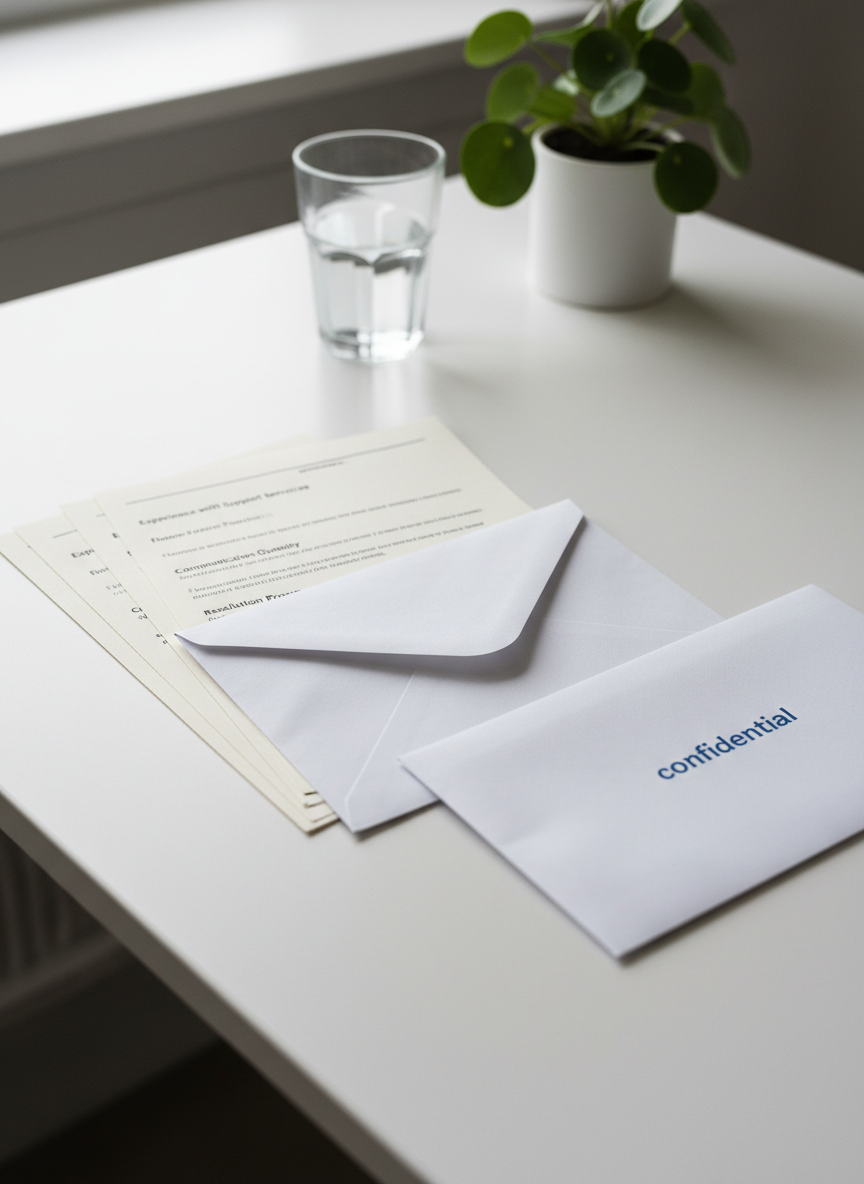
A close-up of a carefully arranged set of anonymous survey materials on a matte white table: a thick, unbranded envelope, a multi-page questionnaire with tidy black-and-grey typography, and a plain, sealed return envelope labeled “confidential” in understated blue lettering. A glass of water and a small, simple desk plant in a white ceramic pot sit further back, adding softness. Diffused overcast light from above creates even, shadow-free illumination, emphasizing privacy and neutrality. Shot from a slightly elevated angle with sharp focus throughout, in a clean, photographic realism style that feels calm, respectful, and professional, highlighting the seriousness and care given to victim satisfaction surveys.

Our Approach

Photo by Andrea Piacquadio on Pexels.com

Evidence based

We use rigorous research methods to gather reliable, actionable insights.

Photo by fauxels on Pexels.com

Victim centered

We prioritise the voices and experiences of victims, ensuring their feedback shapes service improvements.

Photo by William Fortunato on Pexels.com

Impact focused

Our research is designed to create tangible improvements in how victims are supported.

Research methods

We use a range of research methods to gather comprehensive insights into victim satisfaction and experiences:

In-depth Telephone Interviews

A private conversation with a member of our team where you can talk about your experience in more detail. We use a flexible set of questions so people can describe what happened in their own words and share anything they feel is important.

Quantitative Surveys

Structured questionnaires administered to a large sample of individuals to collect numerical data on attitudes, behaviors, experiences and demographics. Data is often collected via online platforms, email or text message.

Focus Groups

Small group discussions (usually 6–10 people) where participants talk about their experiences and views on a specific topic.

Your privacy is protected. You can:

  • use a different name if you prefer
  • keep your camera turned off
  • take part using the chat instead of speaking

These discussions help us understand shared experiences and common issues so services can improve.

A sleek, closed silver laptop displaying a clean data dashboard on its screen, resting on a light oak desk in a quiet, modern office. Beside it lies a neatly stacked set of printed survey forms with crisp black text and simple bar charts, a dark blue notebook, and a fine-tipped pen. Soft daylight from a large window to the left casts gentle, natural highlights and subtle shadows, creating a calm, trustworthy atmosphere. Shot at eye level with a shallow depth of field so the laptop and papers are in sharp focus while the background of neutral walls and a blurred filing cabinet recedes. The photographic realism feels professional, clear, and focused on thoughtful analysis of victim feedback.